














TL;DR
- Ann Widdecombe has died aged 78, according to a statement from her agents.
- Her record included opposition to same-sex marriage, support for conversion therapy and criticism of trans rights.
- Ofcom rejected 128 complaints over her 2018 Celebrity Big Brother comments.
Former Conservative minister Ann Widdecombe has died aged 78.
A statement from her agents, Cloud 9 Management, said: “It is with great sadness that today we announce the death of The Right Honourable Ann Widdecombe, DSG.” The BBC reported the statement on 10 July.

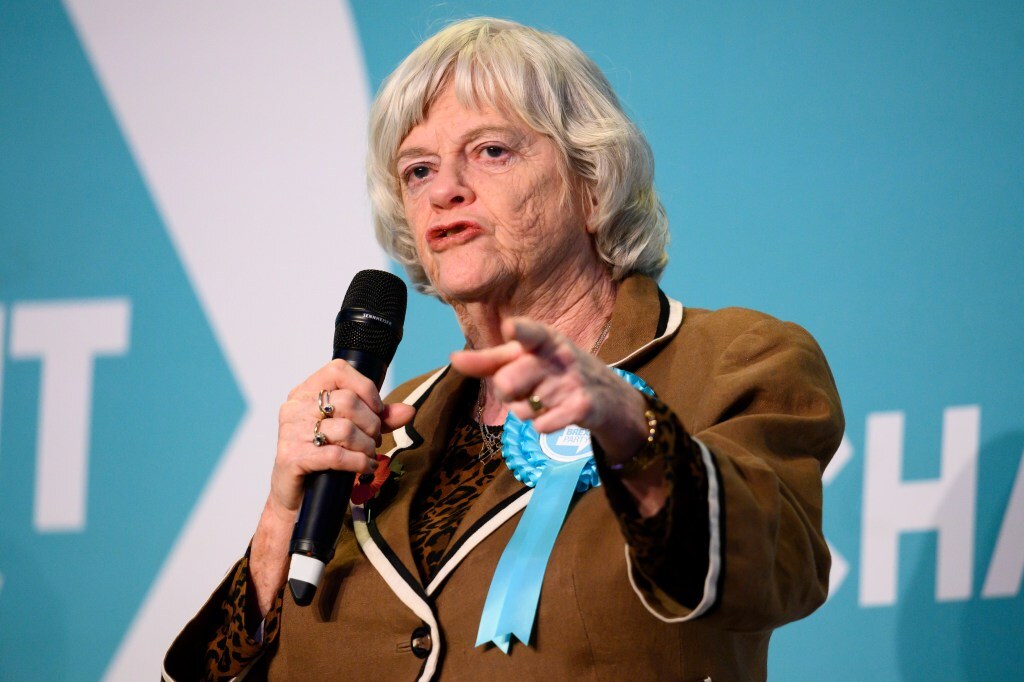
Widdecombe became a familiar public figure through appearances on Strictly Come Dancing and Celebrity Big Brother, but she was also known for a long history of comments and votes opposing LGBTQ+ equality.
Same-sex marriage and equality votes
During her time as a Conservative MP from 1987 to 2010, Widdecombe opposed measures connected to LGBTQ+ equality, including the repeal of Section 28. According to vote monitoring website Public Whip, she opposed every equality measure for LGBT people during her 23 years in Parliament.

She later criticised then-prime minister David Cameron for bringing in same-sex marriage, saying she felt “alienated by gay marriage”.
Speaking to students at the University of Plymouth, she also argued for stronger protection for Christian freedom of speech and said governments were failing to listen to Christians.
In 2020, Widdecombe objected to same-sex pairings on Strictly Come Dancing after lesbian Olympic boxer Nicola Adams danced with a woman. She said: “I don’t think it is what viewers of Strictly, especially families, are looking for.”
Conversion therapy
Widdecombe also publicly supported so-called “gay cure” therapy, the discredited practice that seeks to change or suppress a person’s sexual orientation or gender identity.

In 2012, she questioned why therapy was not available for “gays who do not want to be gay”. In 2019, during her time in the Brexit Party, she said “science may yet produce” a cure for homosexuality.
She added: “I’ve never claimed that such science already exists… I’ve merely said that if you simply rule out the possibility of it, you’re denying people confused about their sexuality the chance [to change it].”
Adoption and discrimination
In 2002, Widdecombe said she could not support legislation that would allow same-sex couples to adopt. She argued that only married parents should be allowed to adopt and said marriage provided children with “stability” and “security”.
She also said people should have the “freedom” to discriminate against gay couples, and claimed gay laws threatened Christian freedom of speech.
Trans rights and Celebrity Big Brother
Widdecombe later turned her criticism toward trans rights as well. After then-prime minister Theresa May gave a pro-trans speech at the PinkNews Awards, Widdecombe said the approach was “very, very bad news for a lot of confused young people”.
She also argued against a simple self-identification process and warned it could lead to “men in women’s prisons or men in women’s refuges”.
In a 2018 column, she described trans-inclusive policies as a “prevailing lunacy” and said the country had “suddenly gone mad over transgenderism” because of “a combination of grievance, political cowardice and a love of bandwagons”.
That same year, on Celebrity Big Brother, she clashed with Drag Race star Courtney Act over comments described as homophobic. She called Act’s behaviour with Andrew Brady “disgusting” and told Brady that his mother and grandmother would be ashamed of him for the pair’s flirtations.
https://en-gb.facebook.com/pinknews/
Ofcom later rejected 128 complaints about “sexual orientation discrimination” over the episode.
Widdecombe’s death marks the end of a public career that, for many LGBTQ+ campaigners, was defined as much by resistance to equality as by her years in elected office and on television.
Why it matters
Widdecombe’s record is likely to be remembered by LGBTQ+ communities as part of the wider political history of resistance to marriage equality, trans inclusion and efforts to ban conversion therapy. Her comments and votes were repeatedly cited by critics as examples of how public figures can shape debate around rights and protections.
Gallery

Alexander Rivera
Alex Rivera, a seasoned political journalist, brings over a decade of experience covering U.S. politics. An alumnus of Columbia University's Journalism School, Alex is known for insightful analyses of political trends a…
More stories →





Comments (0)
Join the conversation